
What we test
What we check. Why we check it.
From an ultrasound of your abdomen to bloods, an ECG and lung checks: here's what happens in a Health MOT at our Dudley clinic.
Explore what’s included ↓★★★★★300+ five-star Google reviews
At a glance
We don't rely
on one test.
A blood result, a scan and a heart check each tell us something different. These are the four parts of your assessment.
Blood biomarkers
50+ markers covering key aspects of metabolic, cardiovascular and organ health.
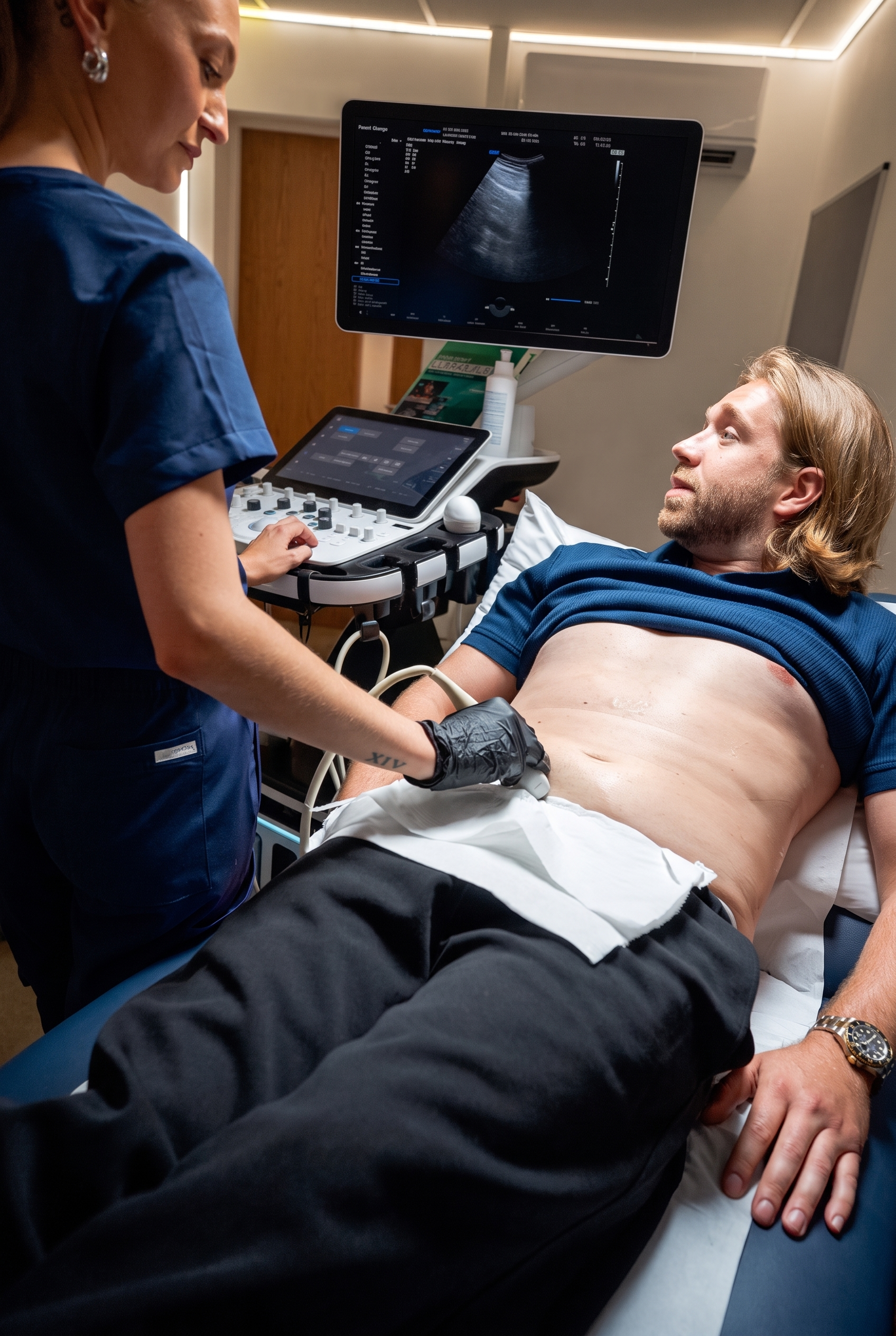
Diagnostic ultrasound
Real-time imaging of key abdominal organs and visible structures.
Heart & lungs
Electrical activity, pressure, recovery, airflow and oxygenation.
Body & function
Composition, strength and measurements that help establish your baseline.
Swipe to explore the four perspectives →
Choose your assessment
See exactly what’s included.
Choose a package here and we'll show you which checks it includes as you read.
Explore every test
What we measure. Why it matters.
Wondering what a particular test is for? Search for it, or open a health area to see what we measure and why.
Heart & circulation
Rhythm, pressure and advanced lipid markers
Included
Your heart is considered through electrical activity, pressure and recovery signals alongside a more detailed view of cardiovascular risk.
- 12-lead ECG with reportRecords the heart’s electrical activity and rhythm.
- Blood pressureMeasures the pressure within your arteries.
- Heart-rate variabilityProvides a snapshot of variation between heartbeats.
- Resting heart rateYour heart rate while the body is at rest.
- Blood oxygenEstimates oxygen saturation in the blood.
- Core cholesterol profileTotal cholesterol, HDL, LDL and triglycerides.
- Apolipoprotein B (ApoB)Estimates the number of potentially artery-damaging lipoprotein particles—not simply how much cholesterol they carry.
- Lipoprotein(a) — Lp(a)Reveals a largely inherited cardiovascular risk factor that is not included in a routine cholesterol profile.
Metabolic health
Blood sugar, lipids and body composition
Included
These measurements help build a picture of how your body manages blood sugar, energy and stored fat.
- HbA1c and glucoseMarkers related to current and longer-term blood sugar regulation.
- Cholesterol profileTotal cholesterol, HDL, LDL and triglycerides.
- Body composition analysisEstimates body fat, muscle and other composition measures.
- Blood pressureAn important part of cardiovascular and metabolic context.
Liver & abdominal organs
Structure and function, considered together
Included
Ultrasound adds information about how key abdominal organs look, while blood markers contribute information about function.
- Full abdominal ultrasoundReal-time assessment of key abdominal organs and visible structures.
- Liver appearanceIncludes assessment for visible fatty change and other sonographic findings.
- GallbladderAssesses its appearance and checks for visible gallstones.
- Liver function biomarkersA panel of blood measurements associated with liver function.
Kidney & urinary health
Imaging, blood markers and urinalysis
Included
Three different types of assessment contribute information about your kidneys and urinary system.
- Kidney ultrasoundAssesses the visible appearance of both kidneys.
- Kidney function biomarkersBlood measurements associated with renal function.
- UrinalysisA point-of-care urine check for a range of indicators.
- Bladder assessmentIncluded within the relevant ultrasound examination.
Blood, nutrients & inflammation
Cells, essential nutrients and inflammatory signals
Included
These biomarkers provide context around blood cells, selected nutritional markers and inflammation.
- Full blood countExamines red cells, white cells and platelets.
- FerritinA marker associated with the body’s iron stores.
- Vitamin B12 and folateNutrients involved in blood-cell and nervous-system function.
- Vitamin DA vitamin with roles across bone, muscle and immune health.
- CRPA non-specific marker of inflammation.
Thyroid & hormones
Core thyroid markers, with enhanced profiles in Plus
IncludedMore in Plus
Core thyroid markers are included in the Health MOT. The Plus package adds a relevant male or female hormone profile.
- TSH and Free T4Core biomarkers used to assess thyroid function.
- Male or female hormone profileAn enhanced blood profile appropriate to biological sex.
- PSA blood test—men onlyA prostate-related blood test interpreted in the appropriate clinical context.
Lungs & oxygenation
Airflow and blood-oxygen measurements
Included
A short respiratory assessment provides a snapshot of airflow alongside your oxygen saturation.
- FEV1The volume of air exhaled during the first second of a forced breath.
- Peak flowMeasures how quickly air can be expelled from the lungs.
- Blood oxygen saturationEstimates the percentage of oxygen carried in the blood.
Body composition & strength
What weight alone cannot explain
Included
Composition and functional-strength measurements add context to metabolic health and provide a useful baseline for change over time.
- Body composition analysisEstimates body fat, muscle and other composition measures.
- Grip strengthA simple functional measurement that can be tracked over time.
- Baseline measurementsRecorded so meaningful change can be compared in future.
Additional screening
Enhanced checks included in Health MOT Plus
Plus only
The Plus package includes everything in the standard Health MOT, with three additional screening elements.
- Bowel cancer screening testAn additional bowel screening test included as part of the Plus assessment.
- Male or female hormone blood profileAdditional hormone biomarkers appropriate to biological sex.
- PSA blood test—men onlyA prostate-related blood test for eligible male patients.
About the blood panel: markers shown here are representative of the Health MOT. The exact panel, eligibility and scope of testing are confirmed before booking and may be updated in line with clinical requirements.
Individual measurements explained
Every test has a reason.
You shouldn't have to recognise an acronym to understand your health check. Tap a test to see what it measures and what an unexpected result might mean.
01
Blood pressure
Pressure within your arteries
- What it measuresSystolic pressure, when the heart contracts, and diastolic pressure, when it relaxes between beats.
- Why it mattersHigh blood pressure often causes no symptoms. If it remains raised, it places additional strain on the blood vessels, heart, brain, kidneys and eyes.
- What a raised result may meanA raised clinic reading can be temporary because of stress, pain, caffeine or recent activity. Persistently raised readings can indicate hypertension and increase the risk of heart disease, stroke and kidney disease.
A single raised reading does not diagnose hypertension. Repeat, home or 24-hour monitoring may be recommended.
02
Heart-rate variability
HRV — variation between heartbeats
- What it measuresThe small variation in time between one heartbeat and the next, usually measured in milliseconds.
- Why it mattersHRV provides a window into how the autonomic nervous system is balancing activation and recovery. It is most useful as part of a wider picture or when tracked over time.
- What a lower result may meanHRV is highly individual and is affected by age, fitness, sleep, stress, illness, alcohol, medication and recovery. A lower reading can reflect increased physiological strain, but it is not a diagnosis of a heart condition.
Context and trends matter more than comparing one HRV number with somebody else’s.
03
12-lead ECG
Heart rate, rhythm and electrical activity
- What it measuresA resting ECG records the electrical signals produced as the heart beats, viewed from 12 different electrical perspectives.
- Why it mattersIt provides information about heart rate, rhythm and conduction that cannot be obtained from blood tests or blood pressure alone.
- What an unexpected result may meanChanges may be associated with an abnormal rhythm, conduction variation or another cardiac finding that warrants clinical review or further testing.
A short resting ECG is a snapshot. A normal result cannot exclude every heart problem or an intermittent rhythm disturbance.
04
Lung function
FEV1 and peak expiratory flow
- What it measuresFEV1 measures how much air you can forcefully breathe out in the first second. Peak flow measures the fastest speed of that exhalation.
- Why it mattersTogether they provide a useful snapshot of airflow and how effectively air can move out of the lungs.
- What a reduced result may meanA lower result can reflect test technique, a recent respiratory illness or possible airflow limitation. Persistently reduced measurements—particularly with symptoms—may require fuller spirometry or medical assessment.
These screening measurements are not the same as a complete diagnostic spirometry assessment.
05
Blood oxygen
Peripheral oxygen saturation — SpO2
- What it measuresA pulse oximeter estimates the percentage of haemoglobin carrying oxygen in your blood.
- Why it mattersIt provides a quick indication of how effectively oxygen is moving from the lungs into the circulation.
- What a lower result may meanAn unexpectedly low reading can occur with respiratory or circulatory problems, but cold hands, movement, nail products and device limitations can also affect the result.
An unexpected reading is repeated and considered alongside symptoms and the other measurements.
06
Resting heart rate
Heartbeats per minute at rest
- What it measuresThe number of times your heart beats in one minute while you are resting.
- Why it mattersIt adds context to blood pressure, HRV and ECG findings and can be useful as a baseline for future comparison.
- What a high or low result may meanFitness, stress, caffeine, dehydration, fever, medication and heart rhythm can all influence the rate. A result outside the expected range is interpreted with the ECG and clinical context rather than in isolation.
07
Body composition
Fat, muscle and body-water estimates
- What it measuresBioelectrical impedance estimates the relative proportions of body fat, muscle and water rather than relying on weight alone.
- Why it mattersTwo people with the same weight can have very different body composition. The measurement adds context to metabolic health and creates a baseline for tracking change.
- What an unexpected result may meanHigher body-fat or lower muscle estimates may support a discussion about metabolic risk, activity and nutrition. Hydration and recent food or exercise can influence the reading.
Bioimpedance provides an estimate and is not equivalent to diagnostic body-composition imaging.
08
Grip strength
A practical measure of muscle function
- What it measuresThe maximum force generated when squeezing a handheld dynamometer.
- Why it mattersGrip strength is a simple functional measurement that adds information about strength and physical resilience and can be followed over time.
- What a lower result may meanA lower measurement can be influenced by age, body size, hand injury, pain, technique, inactivity or reduced overall muscle strength.
It is interpreted as one part of the assessment, not as a diagnosis by itself.
09
Urinalysis
A point-of-care urine assessment
- What it measuresA test strip checks a range of chemical indicators in a urine sample, including markers related to blood, protein, glucose, infection and urine concentration.
- Why it mattersUrine can provide useful additional information about the urinary system, hydration and metabolic health that is not available from a blood test alone.
- What an unexpected result may meanChanges can occur with infection, dehydration, kidney or urinary conditions, blood-sugar changes, recent exercise or sample contamination. The pattern determines whether repeat testing or medical review is appropriate.
A screening urinalysis cannot diagnose the cause of an abnormal result on its own.
10
Abdominal ultrasound
Real-time imaging of key organs
- What it measuresUltrasound uses sound waves to create live images of key abdominal organs and visible structures without ionising radiation.
- Why it mattersBlood tests mainly provide information about function. Ultrasound adds structural information—for example, the visible appearance of the liver, gallbladder, kidneys and bladder.
- What an unexpected finding may meanImaging may identify visible fatty liver change, gallstones, cysts or another structural finding that needs explanation, monitoring or onward assessment.
Ultrasound cannot visualise every condition or rule out every cause of symptoms.
11
50+ blood biomarkers
Function, risk and nutritional context
- What they measureMarkers across blood cells, blood sugar, cholesterol, liver, kidney, thyroid, inflammation and selected nutrients—including advanced cardiovascular markers ApoB and Lp(a).
- Why they matterIndividual biomarkers answer specific questions. Patterns across several results can be more informative than one number viewed alone.
- What an altered result may meanA result outside its reference range may reflect health, medication, hydration, diet, recent illness or normal biological variation. Findings are interpreted in context and may need confirmation.
The exact panel is confirmed before booking. Blood-test findings are considered alongside imaging and physical measurements.
12
Apolipoprotein B
ApoB — atherogenic particle number
- What it measuresApoB is a protein carried by the lipoprotein particles that can deposit cholesterol in artery walls. Because each of these particles carries one ApoB molecule, the result provides an estimate of their number.
- Why it mattersLDL cholesterol measures how much cholesterol is being carried; ApoB helps show how many potentially artery-damaging particles are carrying it. Two people with a similar LDL result can therefore have a different particle burden.
- What a higher result may meanA higher ApoB level indicates more atherogenic particles in circulation and can strengthen the evidence of cardiovascular risk—particularly when triglycerides, blood sugar or other lipid results make the standard cholesterol picture less clear.
ApoB is interpreted with the full lipid profile, blood pressure, glucose markers, medical history and overall cardiovascular risk—not as a diagnosis on its own.
13
Lipoprotein(a)
Lp(a) — inherited cardiovascular risk
- What it measuresLp(a) is an LDL-like lipoprotein particle whose level is largely determined by the genes inherited from your biological parents.
- Why it mattersIt is not part of a routine cholesterol profile. A person can have reassuring standard cholesterol results while Lp(a) remains raised, so measuring it can reveal an otherwise hidden, lifelong risk factor.
- What a higher result may meanHigher Lp(a) is associated with greater risk of cardiovascular disease, including heart attack and stroke, and with calcific aortic-valve disease. The result helps place the rest of your modifiable risk factors in better context.
Lp(a) is generally stable and often only needs measuring once. Lifestyle has little effect on the level itself, but knowing it is raised can make management of blood pressure, LDL cholesterol, smoking and other modifiable risks more important.
This information explains the purpose of the tests in general terms. Screening results do not diagnose a condition on their own and should always be interpreted alongside your history, symptoms and the wider assessment.
Further information: NHS blood pressure guidance · NHS ECG guidance · NHS lung-function guidance · BHF Lp(a) guidance · EAS/EFLM lipid-marker consensus
How we draw it together
We don't just send you the numbers.
Our sonographer looks at the scan. We check the blood results and other measurements too. Then we talk about what is worth doing with the findings.
That could mean a practical change to food, activity, sleep or stress. It could mean asking our dietitian to help with nutrition, or getting GP advice when a result needs medical follow-up.
A useful starting point
We explain what looks fine, what needs watching and which everyday changes are worth discussing.
GP advice when needed
If a result needs medical review, a GP can help us advise on appropriate follow-up.
Dietitian advice when relevant
Our dietitian can help translate blood and body-composition findings into food choices that fit your life.
We'll explain which advice is included and when a separate consultation would be useful. Our service does not replace ongoing care from your own GP or specialist.
Your results
One report. A clearer view.
Your report puts the scan, bloods and other checks in one place. We explain which findings matter, what you might change and when medical follow-up is needed.
Reviewed by our clinical team
Someone looks across your results, rather than sending you raw figures.
Written for you
We explain the findings in words you can understand and share.
What happens next
Clear priorities, from a change you can make to medical follow-up when needed.
Fatty liver (mild)
Mild fatty change seen. We'll discuss what it may mean and whether follow-up is needed.
Within rangeMonitorAction
HbA1c
Normal
5.2%
Triglycerides
Normal
0.9 mmol/L
Body fat
Review
28%
Liver ultrasound
Mild
Grade 1
Illustrative report example
Compare packages
Which Health MOT is right for you?
Your Health MOT
Ultrasound, bloods and heart and lung checks in one visit, with a report and advice on what to do with the findings.
- Full abdominal ultrasound
- 50+ blood biomarkers, including ApoB and Lp(a)
- 12-lead ECG with report
- Lung function and blood oxygen
- Urinalysis
- Heart-rate variability
- Body composition and grip strength
- Blood pressure
- Reviewed written report
Your Health MOT Plus
Everything in the Health MOT, with additional bowel, hormone and prostate screening.
- Everything in the Health MOT
- Bowel cancer screening test
- Male or female hormone blood profile
- PSA blood test—men only
Want help acting on your results? Ask about dietitian or GP advice. We'll explain whether this needs a separate appointment and any additional cost.
Good to know
Clear about what screening can do.
What a Health MOT can do
It gives you a broad health check, but no set of screening tests can rule out every condition.
If you have symptoms
Don't wait for a Health MOT if a new or worrying symptom needs medical attention. Contact your GP or the appropriate urgent service.
If we find something
We'll tell you what we found and explain whether GP review or further investigation is needed.