Why ultrasound matters
Blood shows function. Ultrasound shows structure.
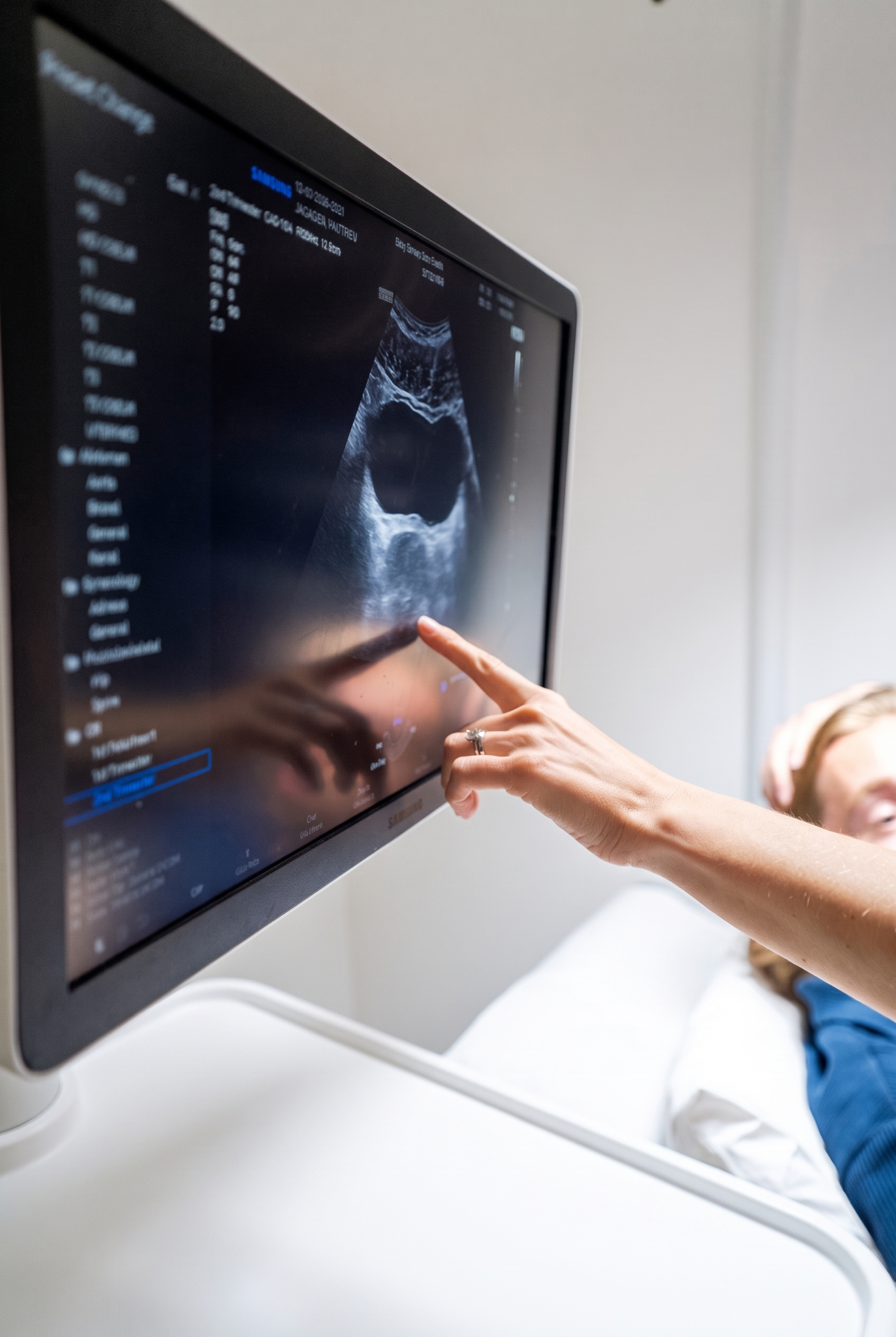
Blood tests can't show what your organs look like. Ultrasound lets our sonographer look at them directly and explain what the scan can show.
Watch Sophie explain ↓★★★★★300+ five-star Google reviews
Sophie explains
Hear why Sophie uses ultrasound.
A connected assessment
Blood tests.
Ultrasound. A conversation.
We don't add ultrasound just to make the test list longer. It answers a different question from a blood test, and we discuss both results with you.
Bloods
We look for clues about how parts of your body are working.
Ultrasound
Our sonographer looks at the visible appearance of key organs.
Explanation
We talk through the findings together and tell you if anything needs follow-up.
What ultrasound adds
What we can actually see.
Some changes are visible on an ultrasound even when a blood result is within range. Here are examples of what the examination may assess.
Liver
Can show appearances suggestive of fatty change and other visible structural findings.
Gallbladder
Can help identify gallstones and visible gallbladder findings.
Kidneys & urinary tract
Assesses kidney appearance and may show stones, swelling or other visible changes.
Bladder emptying
Pre and post-void imaging can assess how effectively the bladder empties where included.
Prostate
For men, ultrasound can add information about prostate size and its effect on bladder emptying.
The organs and measurements assessed depend on the examination or Health MOT selected.
Why context matters
A normal blood result isn’t an image.
A normal liver blood test doesn't tell us what the liver looks like. An ultrasound can't tell us everything about how it functions. That is why we use both.
How is it functioning?
Measures substances circulating in the blood and helps identify functional or metabolic patterns.
What does it look like?
Uses sound waves to visualise organ appearance, dimensions and selected structural findings.
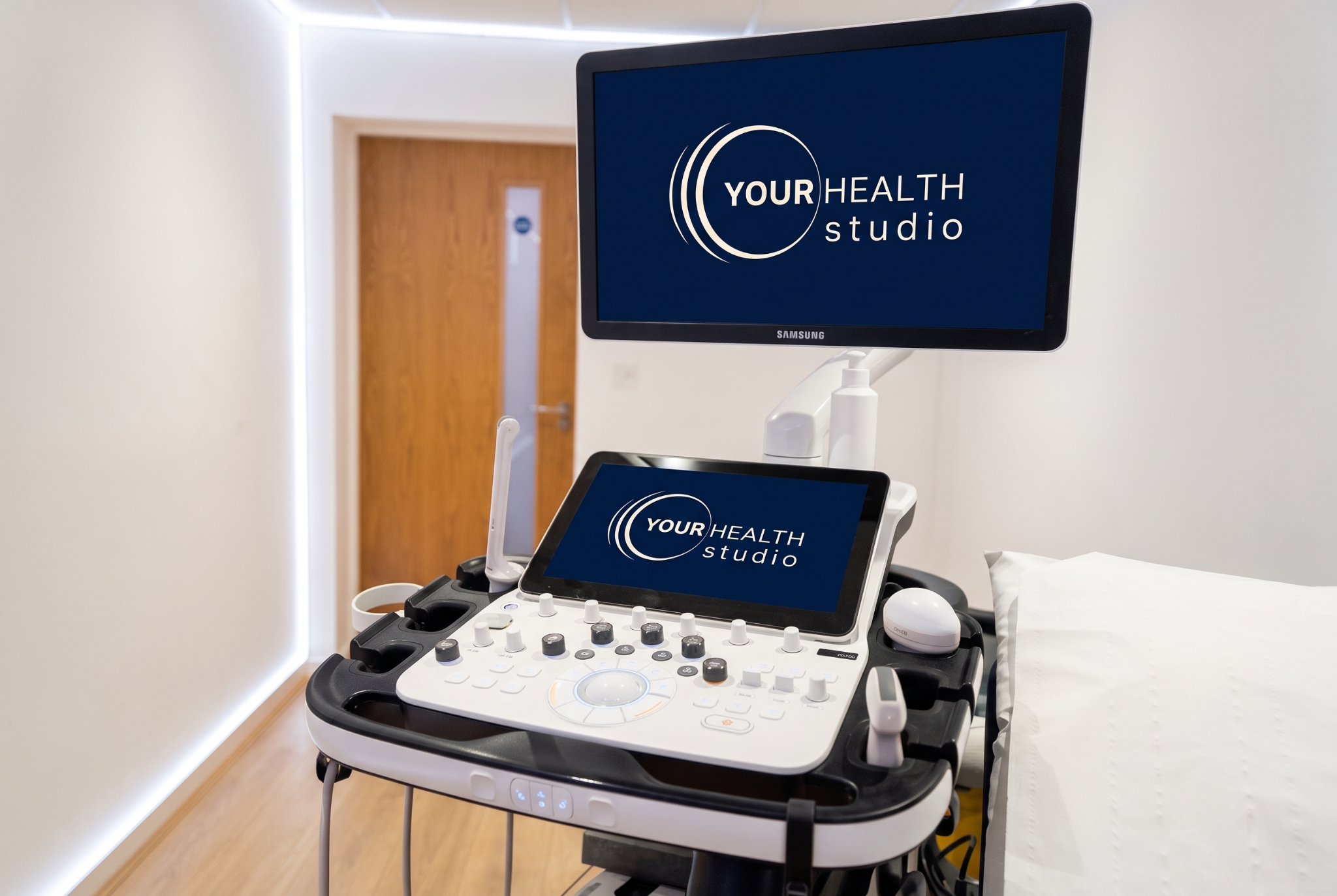
Modern diagnostic ultrasound equipment in our Dudley clinic.
Brought together
The bloods look fine. The scan shows more.
Blood markers within range.
Fatty liver appearances on ultrasound.
That doesn't mean there's an urgent problem. It means there's something useful to discuss: possible causes, whether medical follow-up is needed and what changes might help. We can involve our dietitian for practical food advice or seek GP input when appropriate.
Bloods+Ultrasound→Context
Illustrative only. Ultrasound findings require appropriate clinical interpretation and do not replace medical diagnosis.
Your appointment
What happens in the room.
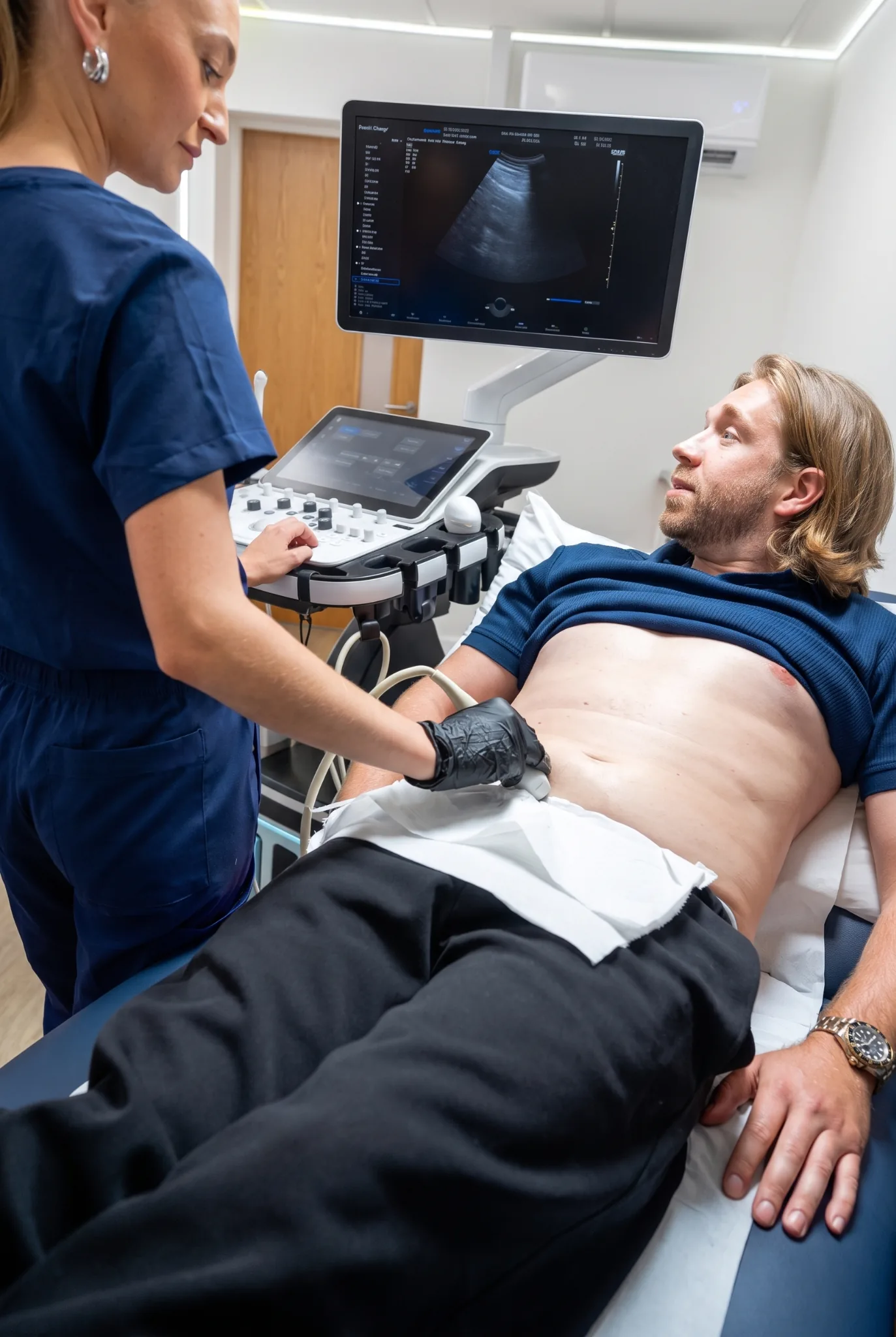
A diagnostic abdominal ultrasound is non-invasive, uses no ionising radiation and takes place in a private clinical room.
Prepare
We send clear preparation instructions based on the areas being assessed.
Scan
Gel is applied to the skin while the sonographer examines the relevant organs in real time.
Ask questions
Your sonographer will talk you through the examination and explain what can be discussed at the time.
Know what to do next
Your report records the findings. We can discuss practical changes and arrange dietitian or GP advice where appropriate.
Swipe to explore →
Registered & regulated
A sonographer you can talk to.
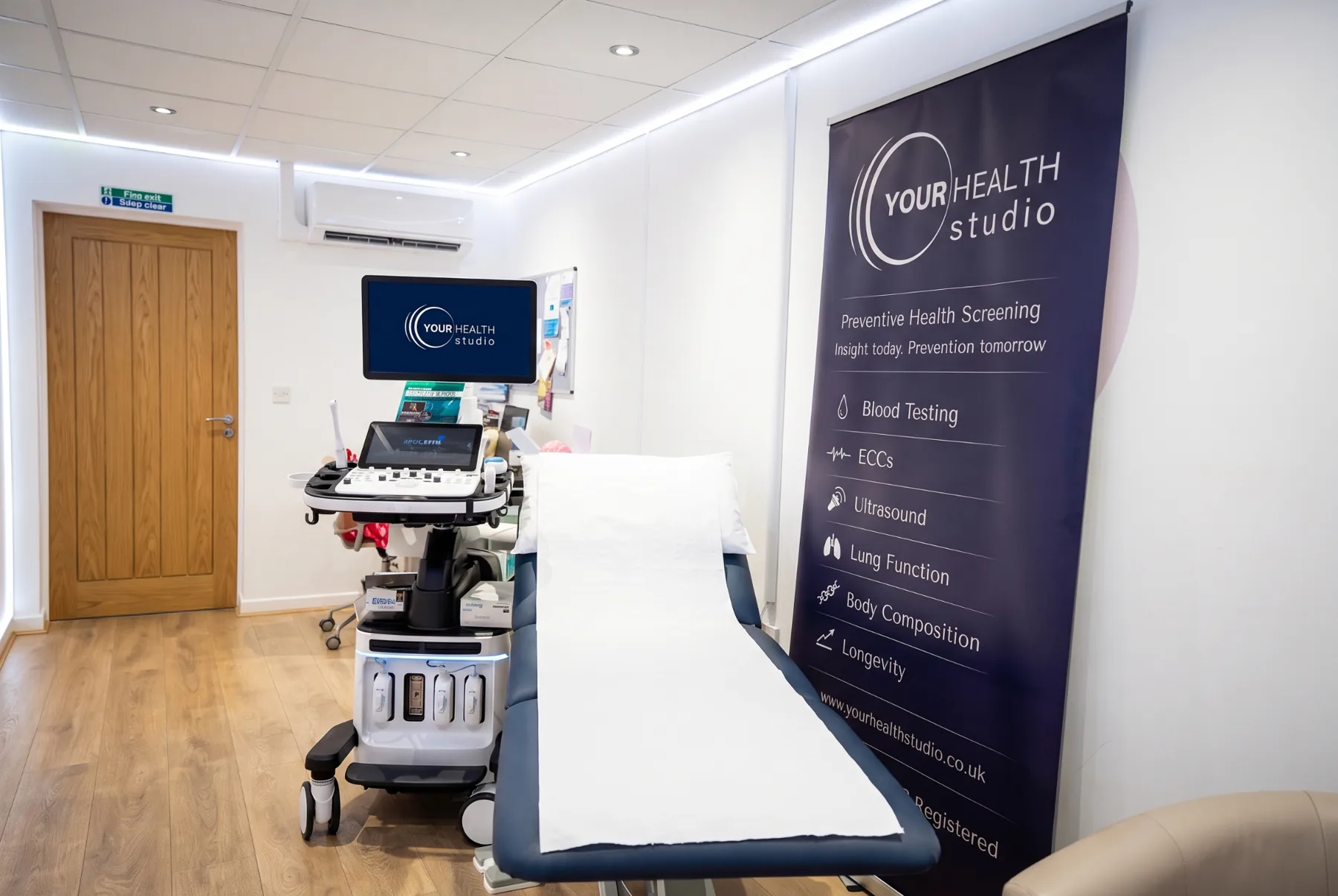
CQC registered clinicHCPC registered sonographerNo ionising radiation
See the fuller picture
Ultrasound within your Health MOT.
The ultrasound is one part of your Health MOT. We also check blood markers and heart and lung measurements, then explain what the results mean together.
Book now → See how blood testing works →Questions about ultrasound
Clear answers, before you book.
Is ultrasound included in every Health MOT?
Diagnostic abdominal ultrasound is central to our Health MOT service. The exact areas examined depend on the assessment selected, and we will confirm these before you book.
What areas do you scan?
Our assessments may include abdominal organs such as the liver, gallbladder and kidneys. Relevant packages can also include bladder emptying and prostate assessment for men.
Can ultrasound diagnose fatty liver?
Ultrasound can show appearances suggestive of fatty liver. Those appearances should be interpreted alongside your history, risk factors, blood markers and any appropriate medical follow-up.
Can ultrasound rule out cancer?
No. A screening ultrasound cannot rule out all cancers or every health condition. We explain the scope and limitations of the examination clearly.
What happens if something abnormal is found?
We will explain the finding and recommend the appropriate next step, including GP review, further imaging or urgent escalation where indicated.
Can you help me make changes afterwards?
Yes. Depending on the finding, we can discuss food, exercise, sleep and stress, and arrange dietitian or GP input where appropriate. We will explain whether any further consultation is separate from the Health MOT.
Does this replace my GP?
No. Your Health Studio does not replace NHS or GP care and is not an emergency service.
Is diagnostic ultrasound safe?
Diagnostic ultrasound is non-invasive and does not use ionising radiation. It is performed by an experienced registered sonographer using appropriate clinical settings.